

What Cars.com Likes About Towing with the Sequoia
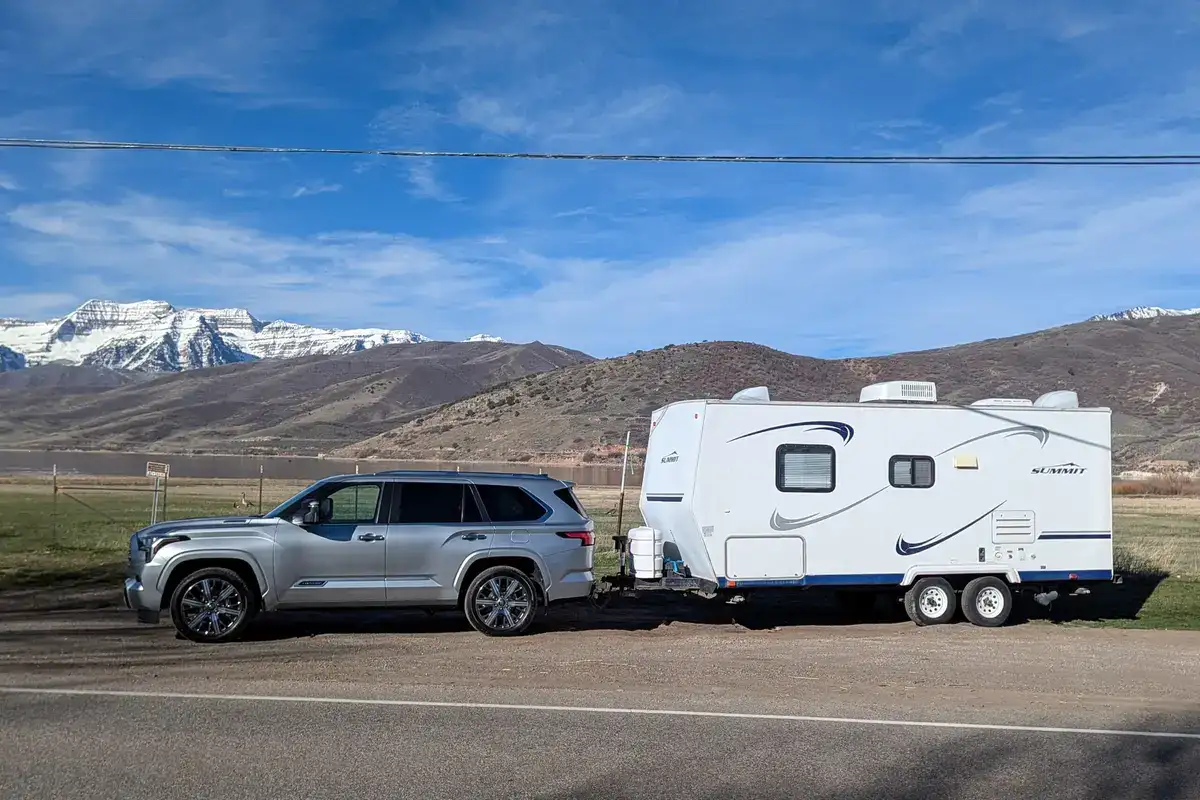 One of the things people appreciate most about full-size truck-based SUVs is their towing ability. Sharp Toyota offers some of the most popular SUVs for this role, including the GMC Yukon, Chevrolet Tahoe, and their longer Yukon XL and Suburban siblings. But for those who appreciate the way Toyota does things, there is the Sequoia, which has a generous maximum towing capacity of 8,980 to 9,500 pounds, depending on the trim. At the lower end of that scale is the Capstone flagship model, which Cars.com reviewed primarily for its towing quality.
Like its GM competitors, the Sequoia is built on a full-size pickup truck platform and uses the same drivetrains, in this case, the Tundra’s. The Sequoia Capstone differs from the Tahoe/ Yukon/ Suburban models by being powered not by a large-displacement V-8 but by a twin-turbocharged 3.5-liter V-6, which is paired with the most robust version of Toyota’s Synergy Hybrid system.
Cars.com has a standard routine for its towing tests, in which editors tow the vehicle with their 4,850-pound travel trailer, and then drive the tow rig unladen. The route is 63 miles and includes a mix of city streets, freeways, and mountain highways. There is a mix of long straights and twisting mountain roads, and the elevation ranges from 4,550 to 5,650 feet. One thing editors can’t quite control is maintaining the same ambient air temperature, which varied from the mid-40s to the mid-50s for the towing test, and from the mid-70s to the low-80s on the day they drove the vehicle on its own.
Strong Powertrain
The first thing Cars.com appreciated in its test was the Sequoia’s powertrain. The hybrid system is designed primarily to increase power, delivering 437 horsepower and 583 lb-ft of torque. Power is managed by a 10-speed automatic transmission and sent to all four wheels via a 4-wheel drive system with a 2-speed transfer case. They found the engine and motor combination provided plenty of torque, and when combined with the 10-speed automatic, it made driving “effortless.” Editors even noted that accelerating to freeway speeds on an uphill onramp never pushed the engine past 3,500 rpm.
Towing Mirrors
Large side mirrors are always appreciated when towing, and the Capstone included Toyota’s optional towing mirrors. Not only are these mirrors large and combine a conventional mirror with a lower convex section, but they also extend 3 inches at the push of a button. While engaged, they automatically retract when the vehicle is shut off and will extend again when the engine is restarted.
Towing Gauges
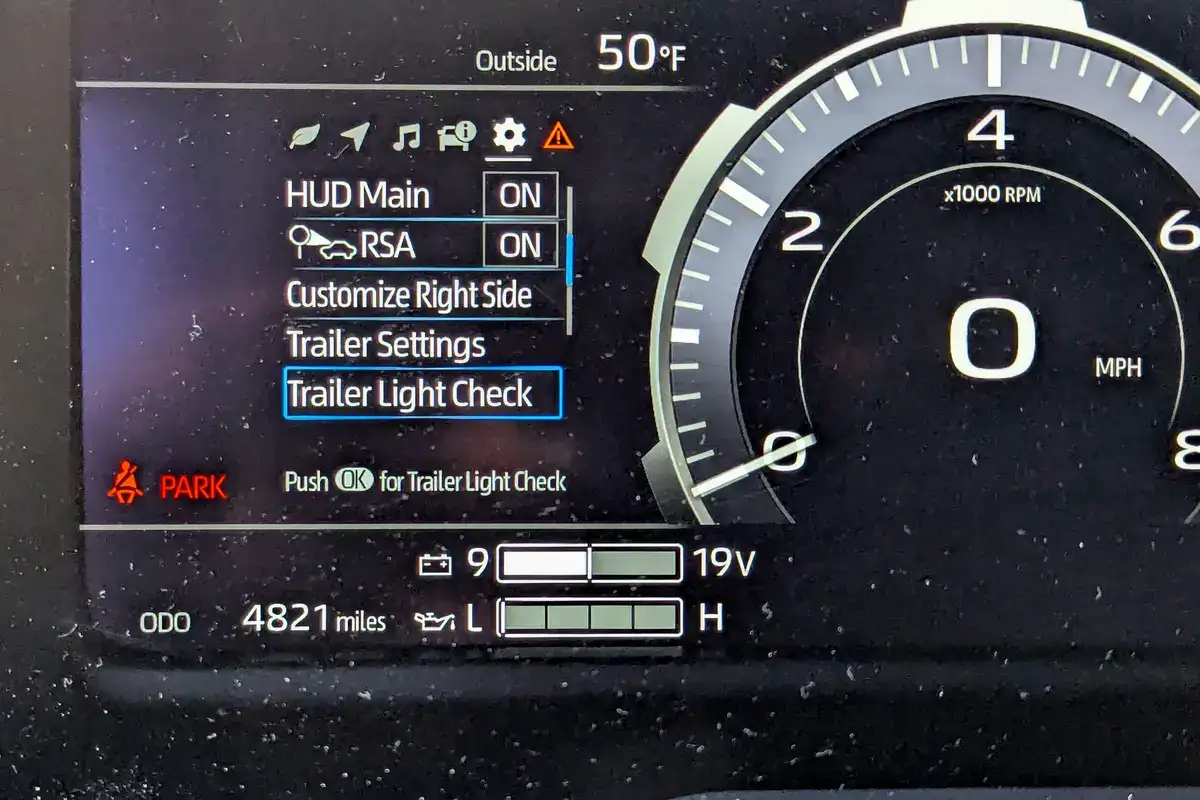
Demonstrating a good use of a digital gauge cluster, a Sequoia driver can activate a set of towing gauges that appear on the right side of the display. In addition to your usual speedometer, tachometer, fuel gauge, battery voltage, and oil pressure gauges, these gauges can also display turbo boost pressure, electric motor input power, oil temperature, and transmission temperature, the last two of which are particularly desirable when towing.
Air Suspension
This Sequoia Capstone features adaptive shocks and rear load-leveling air suspension. This configuration ensures a comfortable ride whether unladen or towing, without a floaty feel. The adaptive suspension adjusts shock valving by regulating fluid flow during compression and rebound. Selecting this option also unlocks additional drive modes, including a customizable setting that lets the driver tailor their preferred driving experience.
 Camera Systems
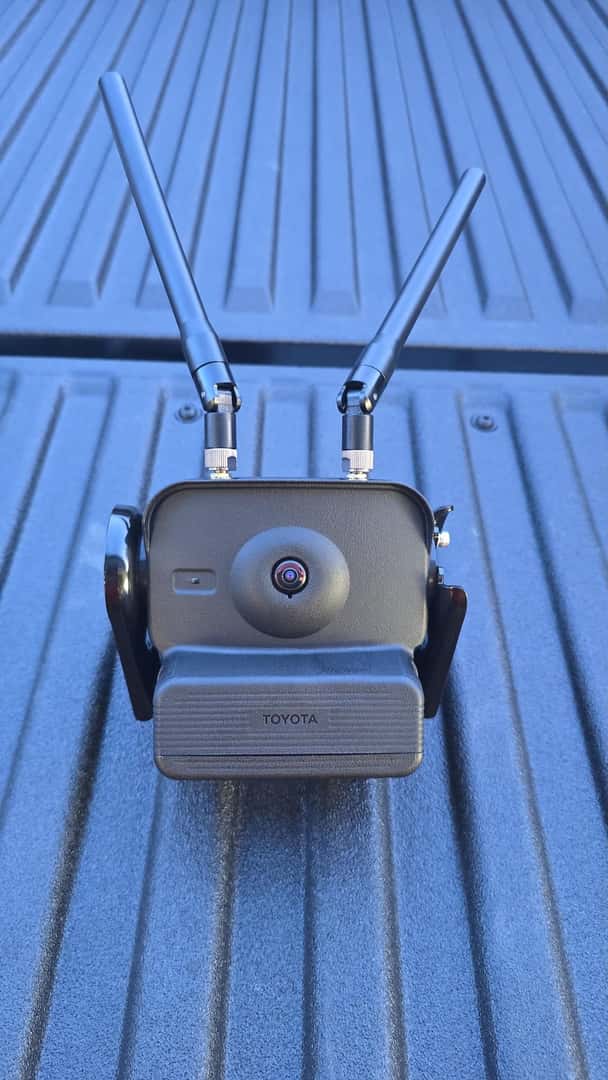
The Sequoia’s rear camera is not perfectly centered, and Cars.com wished it were to better line up the hitch and ball. Fortunately, Trailer Backup Guide with Straight Path Assist (SPA) helps you line things up, though it works best when the hitch and ball are at about the same height. Cars.com did not mention the available Tech Package with Wireless Trailer Camera System, which its test vehicle may not have had since it is a standalone option. This feature includes a wireless camera that can be mounted on the rear of a trailer that will display an image in the Sequoia’s digital rearview mirror or briefly pop up on the audio multimedia touchscreen to help you see directly behind your trailer.
Another complaint is not unique to the Sequoia: there’s a panel to cover the hitch receiver when it is not in use, keeping the receiver clean and providing a more finished appearance. As with most other manufacturers, this panel is secured by plastic clips, which they suspect may break with age or when removing it in very cold weather.
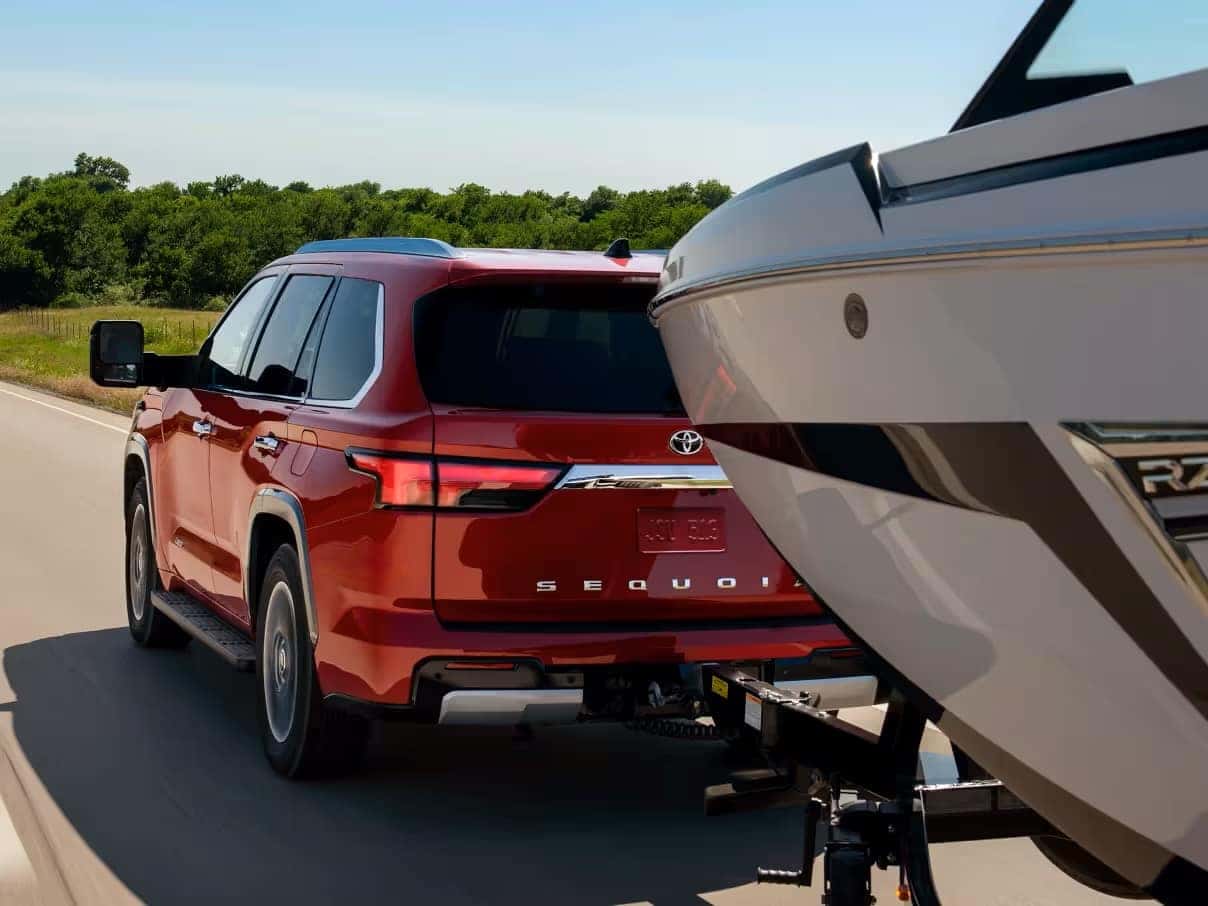
Editors also felt feedback from the trailer at high speeds and reiterated their recommendation for a weight-distribution hitch with sway control for any tall trailer with a high center of gravity, like the travel trailer they were pulling.
Overall, the Sequoia’s towing strengths were significant, and the complaints were minor and mostly rectifiable. If you live in Eastern South Dakota and have some towing to do, visit Sharp Toyota, where you can test the Sequoia back-to-back with the towing stars from Chevrolet and GMC.
0 comment(s) so far on What Cars.com Likes About Towing with the Sequoia